



STONE STEPS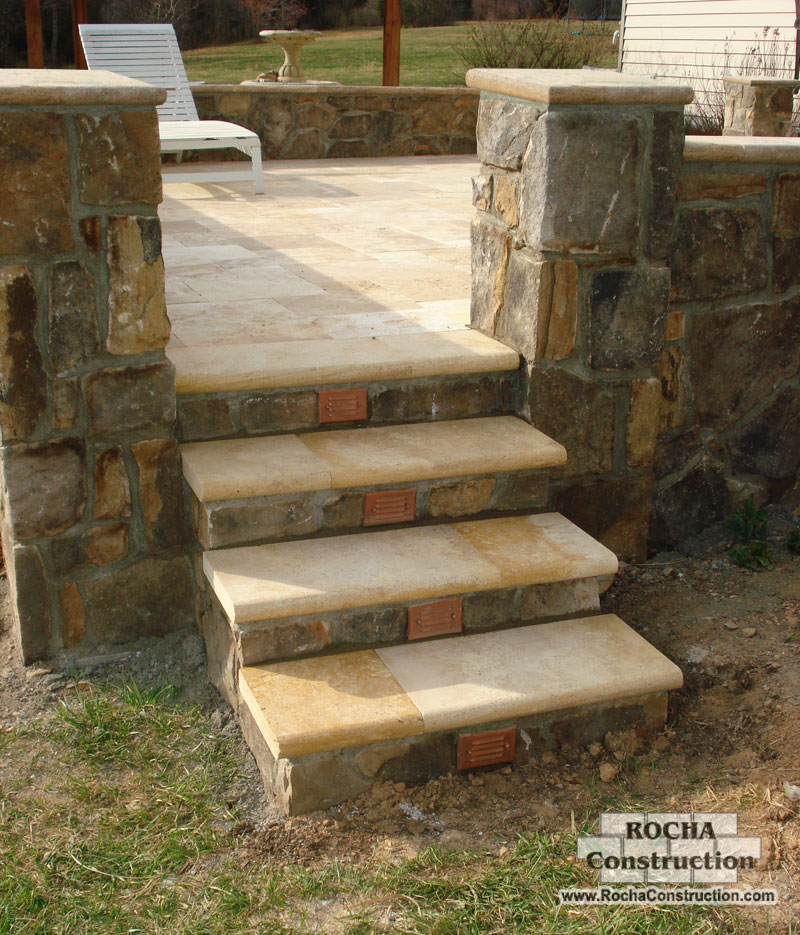
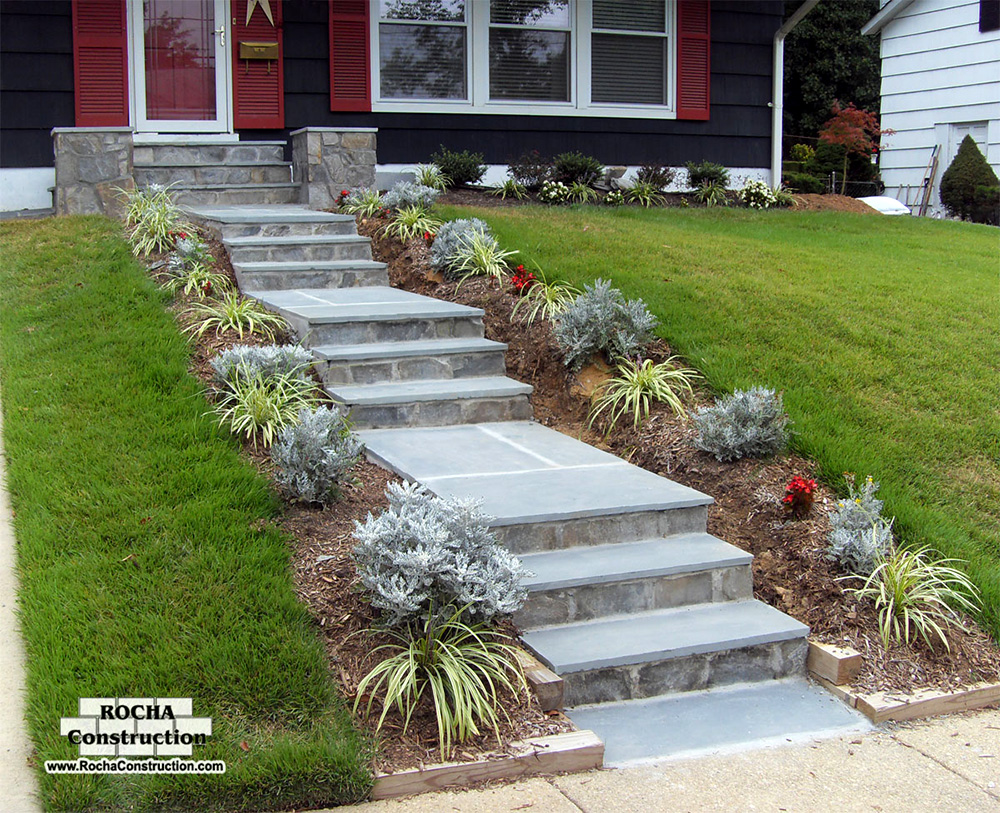
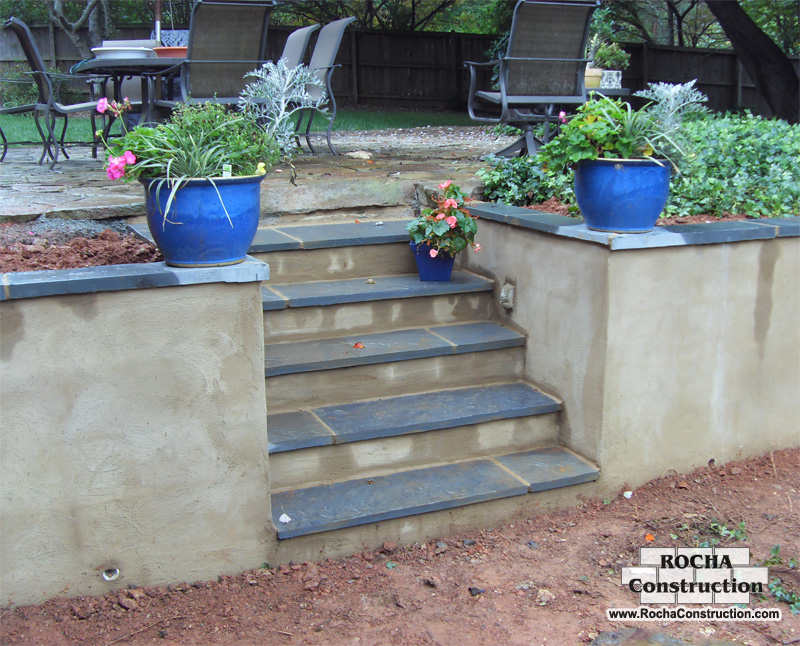
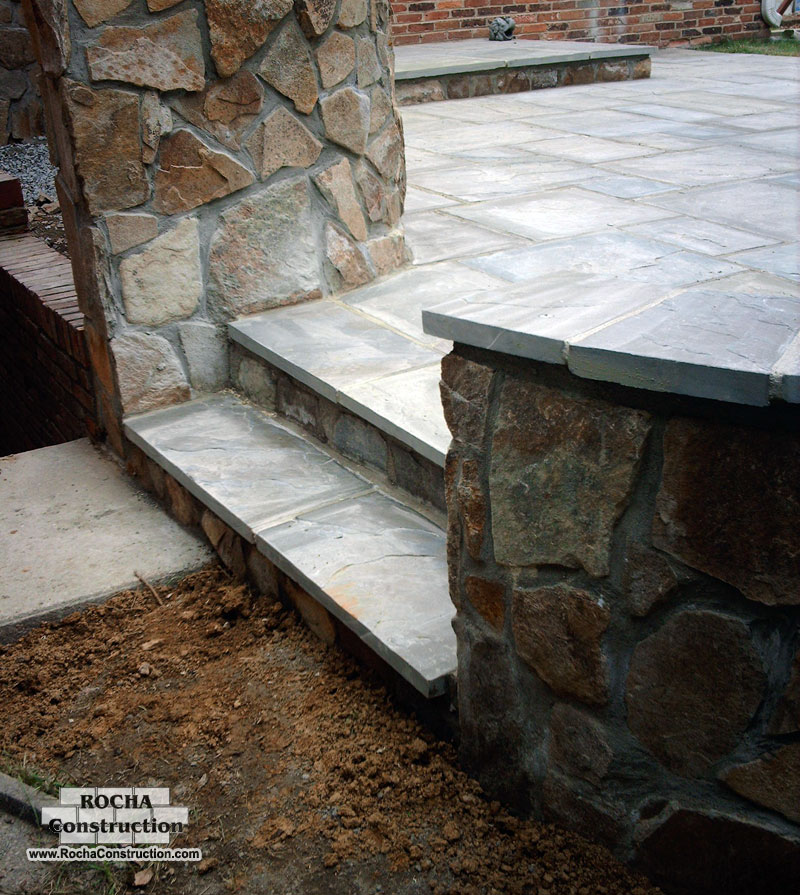
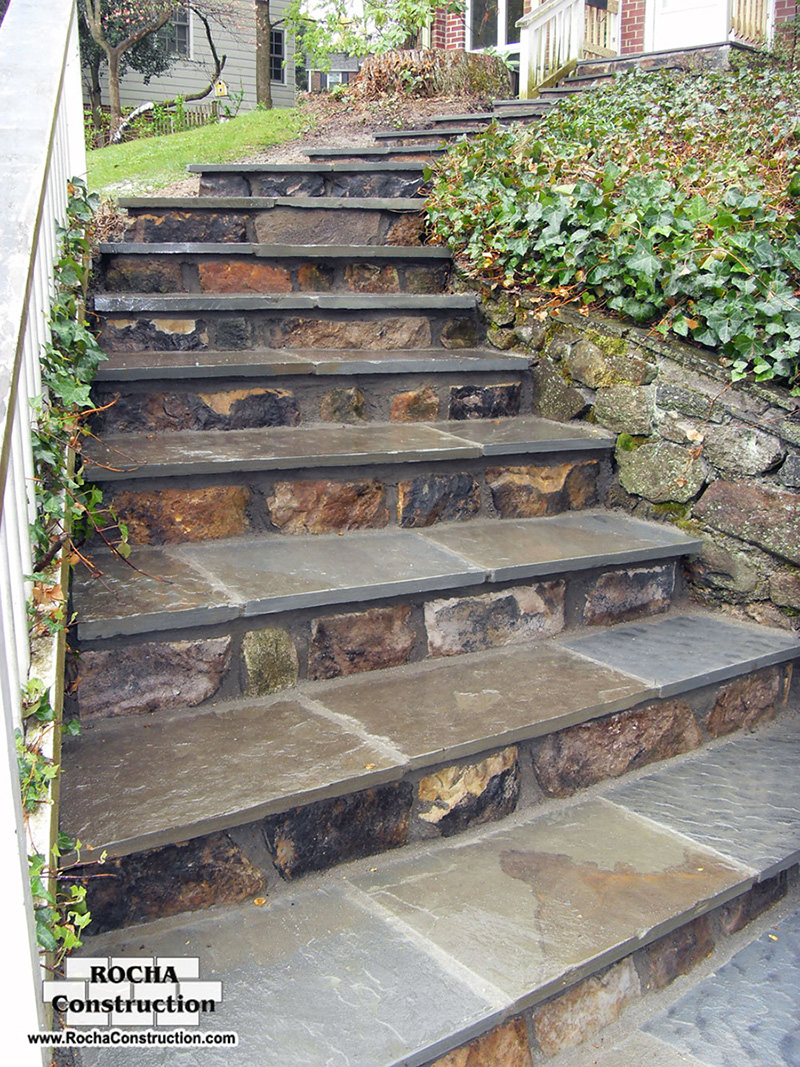
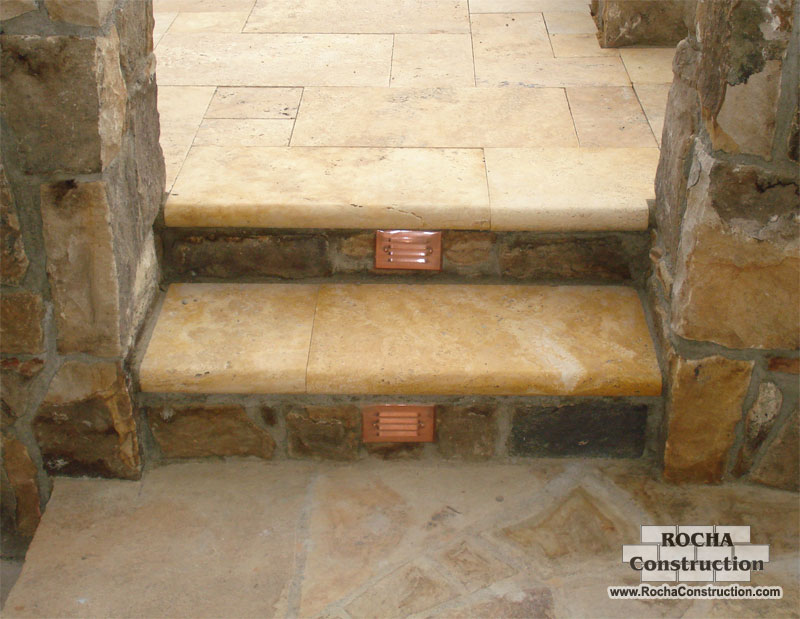
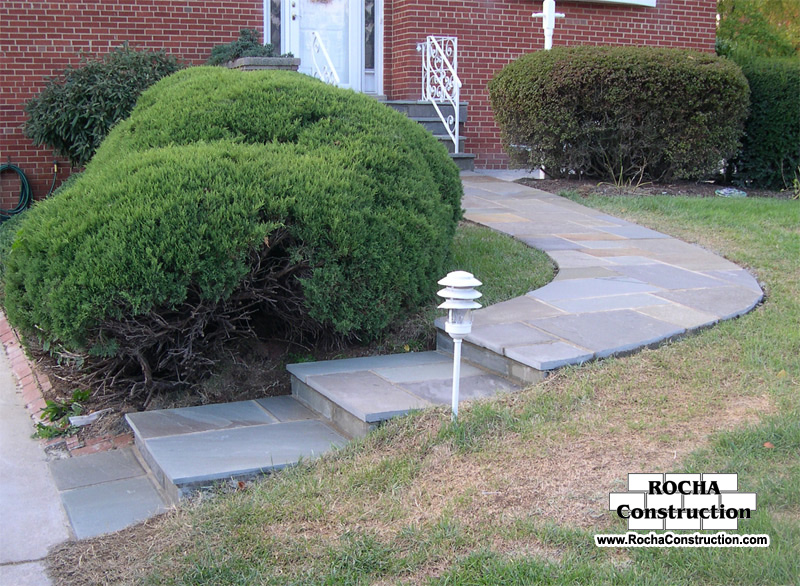
We all know what steps are. But, did you know that there are many ways a stone contractor can improve and fix a set of old or damaged steps? Most exterior steps are built out of concrete. Porches, basement steps, front steps, etc... This concrete, although strong, can fade or crack over time. Which creates a problem because the only way to properly repair concrete is usually a full replacement.We offer a better solution. We can patch and fix your concrete steps and then we can cover them with flagstone or a different stone. 
This, not only fixes the aesthetic issues with old steps, but it improves the look of the house by a big marging. Making your front entrance or your basement steps look better than they did when they were originally built. Stone steps can also be built from the ground up, creating proper footer and installing the stone on top of it. And since the stones can be cut to size and vary in colors and details, the posibilities are endless. This is not a recomended DIY project... So, if you need a professional stone contractor to help you install your new flagstone steps, gives us a call. We offer free estimates for all Montgomery County, Maryland!! |
|
- GALLERY - It is NOT allowed to use our pictures without our written consent. |



|
It is NOT allowed to use our pictures without our written consent. |
Stone Steps FAQ1. What are stone steps? Stone steps are outdoor steps made from natural stone or stone veneer, used to connect different levels in patios, gardens, or landscapes. 2. What materials are used for stone steps? Stone steps can be made from natural flagstone, bluestone, limestone, granite, or manufactured stone designed to mimic natural textures. 3. Do stone steps require a foundation? Yes, proper installation typically requires a compacted gravel or sand base to ensure stability and prevent shifting over time. 4. Can stone steps be curved? Yes, stone steps can be installed in straight or curved patterns to match patios, walkways, or garden layouts. 5. How durable are stone steps? Natural stone steps are highly durable, resistant to weather, and can last for decades when installed correctly. 6. Are stone steps slippery? Some stone surfaces can be slippery when wet. Choosing textured stone or adding anti slip treatments can improve safety. 7. Can stone steps be used with retaining walls or seating walls? Yes, stone steps often integrate with retaining walls, seating walls, or other landscape features for a cohesive outdoor design. 8. Do stone steps require maintenance? Maintenance is minimal and includes occasional cleaning and checking for loose or uneven stones. 9. Can lighting be added to stone steps? Yes, low voltage lighting can be installed along steps or under overhanging stones to improve visibility and safety at night. 10. Do stone steps increase property value? Stone steps enhance functionality and aesthetics in outdoor spaces, which can improve curb appeal and overall property value. |